The EU’s Tax Misstep: How Equal Duties on Nicotine Risk Public Health
The Flawed Logic of Equal Taxation
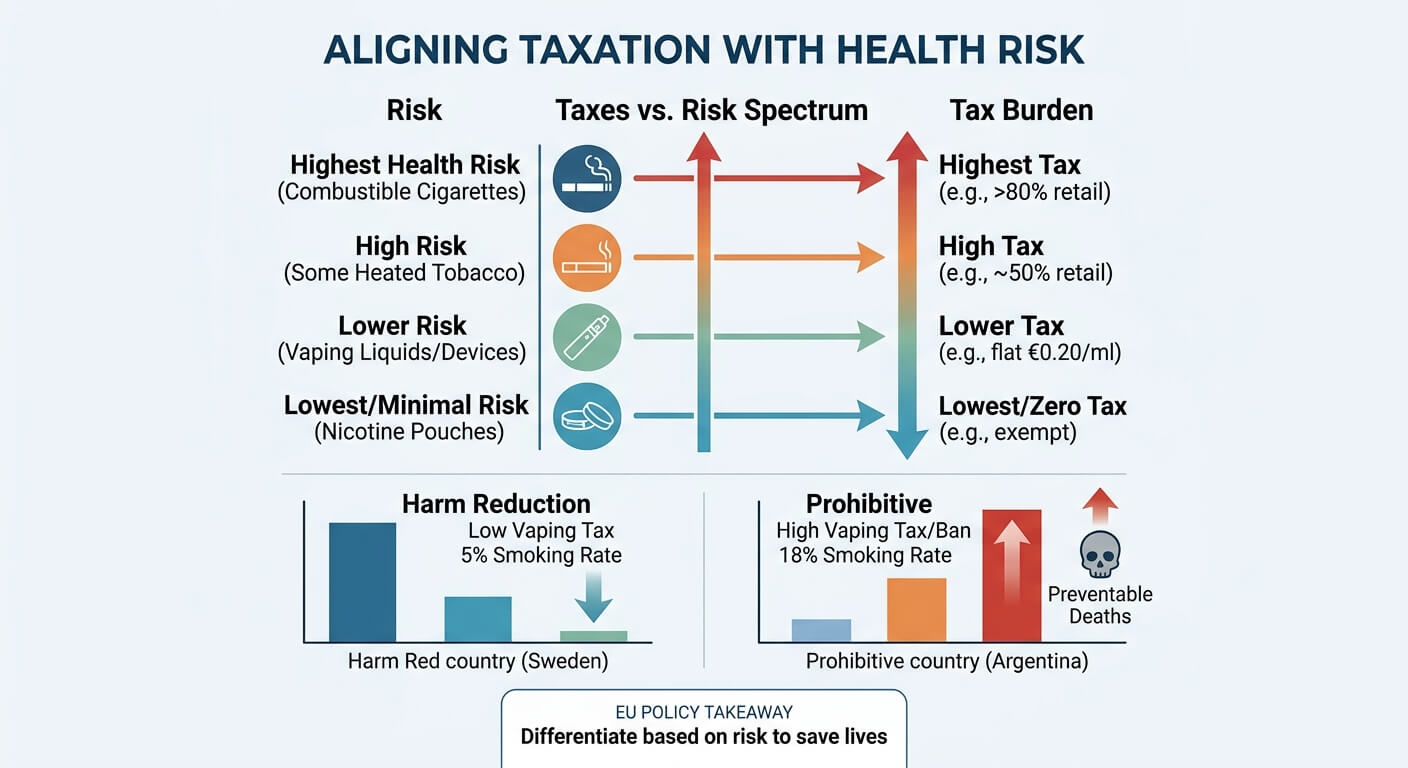
The European Union’s draft update to the Tobacco Excise Directive introduces an alarming priority: stopping consumers from switching from combustible cigarettes to smoke-free alternatives. Under the proposed rates—such as a flat €0.20/mL levy on e-liquids and a 50% retail tax on nicotine pouches—the EU effectively erases the financial incentive for smokers to migrate to safer options.
Taxing non-combustible products at rates comparable to combustible tobacco ignores a fundamental scientific reality: harm stems primarily from toxic smoke, not nicotine itself. Treating all nicotine products as equally harmful removes the primary economic lever driving public health improvement.
Real-World Proof: Incentives Work, Prohibitions Fail
Global evidence clearly shows that outcome hinges on fiscal policy:
The Harm Reduction Model (Sweden, New Zealand, Japan): Nations that maintain wide price differentials favoring safer alternatives see rapid drops in smoking. Sweden's policy of encouraging snus, nicotine pouches, and vapes helped cut daily smoking rates to around 5%, pushing lung cancer rates far below the EU average.
The Prohibitive Model (Argentina, Australia, India): Countries imposing severe restrictions or heavy taxes on alternatives face stagnant or rising smoking rates alongside growing illicit markets. Argentina's strict bans on vaping and heated tobacco left smokers with few choices beyond cigarettes, contributing to thousands of preventable deaths.
Ideological Policy Costs Lives
Refusing to differentiate products based on risk profiles directly contradicts independent reviews from public health authorities, including the Cochrane Collaboration. Member states like Sweden, Greece, and the Czech Republic have demonstrated that widening price gaps drives real progress.
If the EU's goal is truly to reduce smoking-related mortality, fiscal policy must reflect harm reduction principles. Brussels must abandon uniform tax targets and establish a risk-proportionate tax framework that actively encourages smokers to switch.