France’s ANSES Confirms Lower Risks for Vaping Compared to Smoking, but Warns of Misperceptions and Illicit Market Growth
France’s national agency for food, environmental and occupational health safety (ANSES) has released one of the most comprehensive evaluations to date on the health effects of e‑cigarettes. The report, finalized on December 12, 2025 and published publicly on February 4, 2026, reviewed thousands of scientific studies and international assessments to determine the risks associated with vaping.
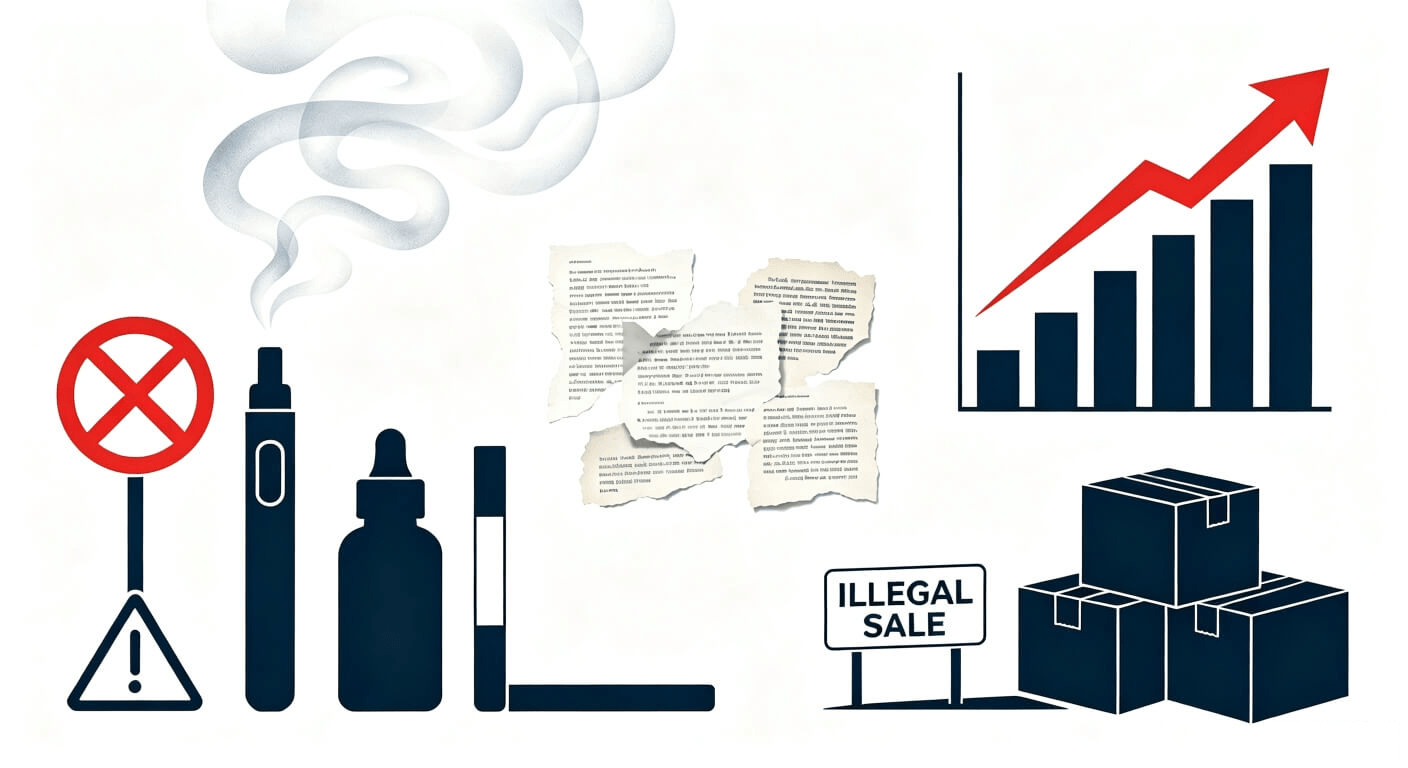
ANSES concluded that e‑cigarettes can expose users to irritants such as aldehydes and may carry potential cardiovascular, respiratory and even possible carcinogenic risks. The agency also noted that nicotine can raise heart rate and blood pressure, and that youth uptake requires strict monitoring.
But the agency’s most consequential finding is also its clearest:
“The absence of combustion is the principal health advantage of vaping.”
— ANSES Expert Panel, 2026
Combustion—the burning of tobacco that produces thousands of toxic byproducts—is responsible for the vast majority of smoking‑related disease. ANSES stated plainly that the overall risks of e‑cigarettes are lower than those of smoking, a conclusion consistent with assessments by Public Health England, the Office for Health Improvement and Disparities, and the Royal College of Physicians.
Most vapers are current or former smokers
France counts more than three million daily vapers, representing roughly six percent of the population. ANSES found that:
Only about 2% of adult vapers have never smoked.
Nearly one third have been vaping for more than four years.
This indicates that vaping in France is overwhelmingly concentrated among current and former smokers—the group that stands to benefit most from switching away from combustible tobacco.
Evidence supports vaping for smoking cessation
ANSES acknowledged that e‑cigarettes can help smokers quit, especially those who have not succeeded with traditional nicotine replacement therapies. Randomised clinical trials have shown higher quit rates with vaping compared to gum or lozenges, reinforcing the agency’s conclusion that non‑combustible nicotine products can reduce exposure to harmful chemicals.
Youth protection remains essential
A 2023 survey cited by ANSES found that among 13‑ to 17‑year‑olds who vape, nearly one third had never smoked or had only experimented once. The agency stressed the need for:
strict age verification
responsible marketing
enforcement against illegal sales
But it also warned that conflating all nicotine products as equally harmful could undermine adult harm‑reduction efforts.
Restrictions and high prices are driving consumers underground
ANSES highlighted a growing challenge: when safer nicotine products are restricted or stigmatized, many users do not quit—they simply move to informal or illicit markets.
A nationwide Ifop survey of 3,000 smokers and vapers found:
More than half of smokers bought cigarettes abroad in the past year.
Nearly one quarter purchased tobacco from unauthorized domestic sellers.
Disposable vapes, banned in 2025, continue circulating through online platforms and informal retail.
Price was the most common reason for illicit purchases, even among consumers who acknowledged higher risks.
ANSES warned that such trends weaken regulatory oversight and may increase harm, especially when unregulated products bypass quality controls.
Public misunderstanding remains a major barrier
ANSES noted that many French citizens believe vaping is as harmful as—or more harmful than—smoking. This perception is not supported by current evidence and may deter smokers from switching, prolonging exposure to combustible tobacco.
A balanced path forward
France continues to face a heavy smoking burden, with cigarettes causing an estimated 75,000 deaths annually. In this context, ANSES emphasized that the meaningful comparison is not between vaping and perfect health, but between vaping and continued smoking.
A balanced strategy, the agency suggests, would include:
strict youth protections
high product standards
accurate communication of risks
enforcement against illicit sales
recognition that eliminating combustion dramatically reduces toxic exposure
For millions of smokers, access to regulated, lower‑risk alternatives could translate into substantial health gains.