Myanmar Enacts Sweeping Vape Ban Under Essential Supplies and Services Law
Myanmar’s military‑controlled government has imposed one of the region’s harshest crackdowns on vaping, issuing a nationwide prohibition that criminalizes not only the sale and import of e‑cigarettes, but also personal possession and use.
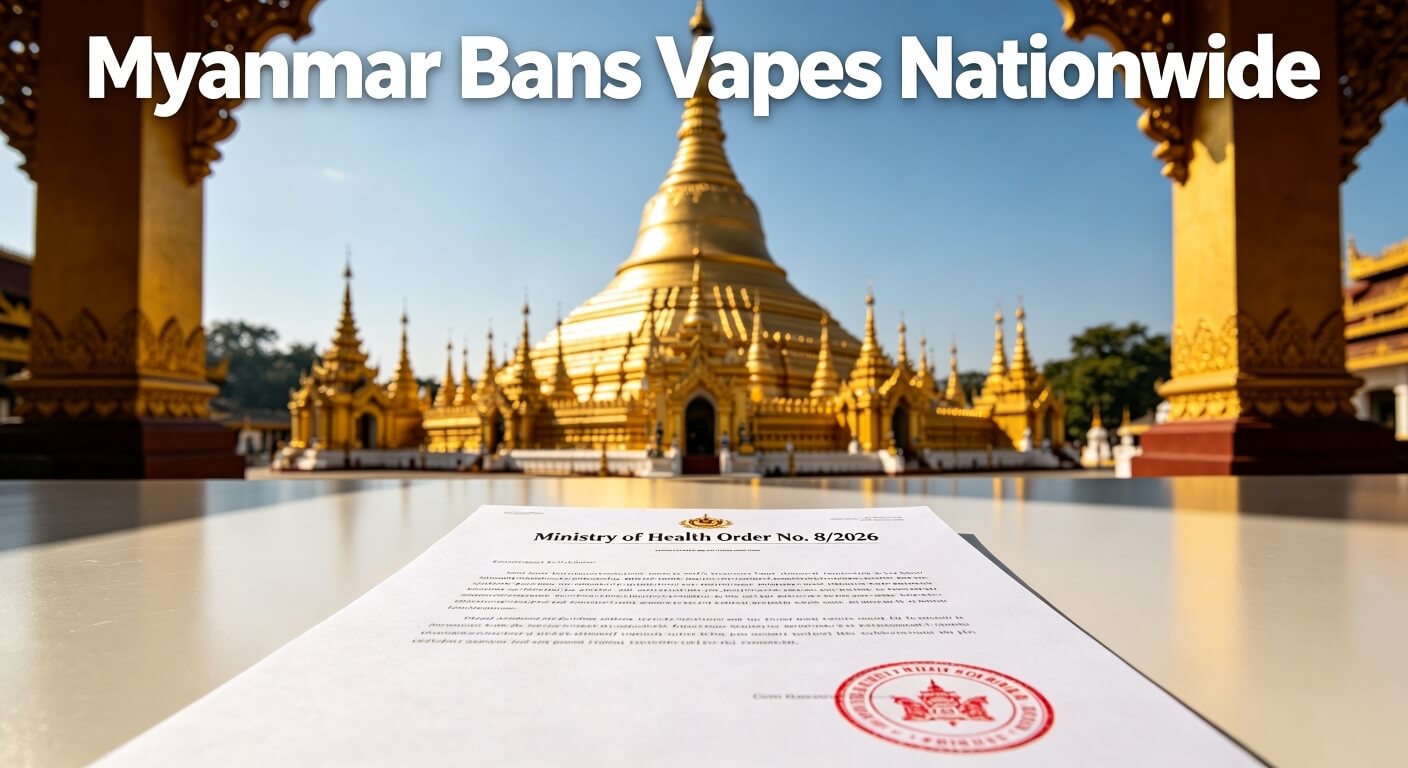
The Ministry of Health formalized the move on February 18, 2026, through Order No. 8/2026, invoking powers granted under the Essential Supplies and Services Law—a statute that allows the government to restrict products deemed harmful to public welfare. The cabinet authorized the action six days earlier, clearing the way for a sweeping ban that took effect immediately.
Under the order, the government now prohibits the “importation, exportation, sale, possession, storage, carrying, distribution, use and consumption” of e‑cigarettes, vape accessories, heated tobacco devices and electronic shisha products. Violations may trigger penalties under the same law historically used to control essential goods during national emergencies.
Officials say the ban is necessary to curb rising youth use. Kyaw Kan Kaung, a senior figure in the Department of Public Health, argued that e‑cigarettes pose dangers comparable to combustible tobacco—a claim widely disputed by international health agencies, including Public Health England and France’s ANSES, which have found vaping significantly less harmful than smoking.
Myanmar’s adult smoking rate stands at 12.3 percent, but the figure masks a stark gender divide: 23.4 percent of men smoke, compared with very few women. Among boys aged 10 to 14, the smoking rate reached 14.29 percent in 2023. Despite these numbers, cigarettes remain fully legal, widely available, and deeply embedded in daily life.
The new ban places Myanmar alongside Cambodia, Laos, Singapore, Thailand and Vietnam—countries that criminalize both sales and personal use of vaping products. Neighboring India and Bangladesh have enacted similar prohibitions.
Public health advocates warn that Myanmar’s decision may unintentionally reinforce the dominance of combustible cigarettes, the product responsible for nearly all tobacco‑related deaths. By eliminating lower‑risk alternatives while leaving traditional smoking untouched, critics say the policy protects the very behavior that causes the most harm.
And for smokers, the implications are clear:
The government has removed a potential off‑ramp from smoking, leaving millions with only the most dangerous option still on the table.
In a country where male smoking rates remain high and cessation support is limited, the ban may ultimately deepen dependence on cigarettes rather than reduce it.
As the region continues to tighten restrictions on vaping, Myanmar’s move underscores a broader trend—one where political caution and regulatory conservatism overshadow emerging evidence on harm reduction. Whether the policy will curb youth nicotine use or simply entrench combustible tobacco remains an open question.