Argentina’s New Vape Regulations Mark a Historic Shift Toward Risk‑Proportionate Tobacco Control
Argentina has taken a decisive step toward modernizing its tobacco‑control framework by lifting its 10‑year ban on vaping products and replacing it with a regulated market structure. The new rules, enacted in 2024, allow adults to legally purchase vapes, heated tobacco products, and nicotine pouches for the first time since the national prohibition was introduced more than a decade ago.
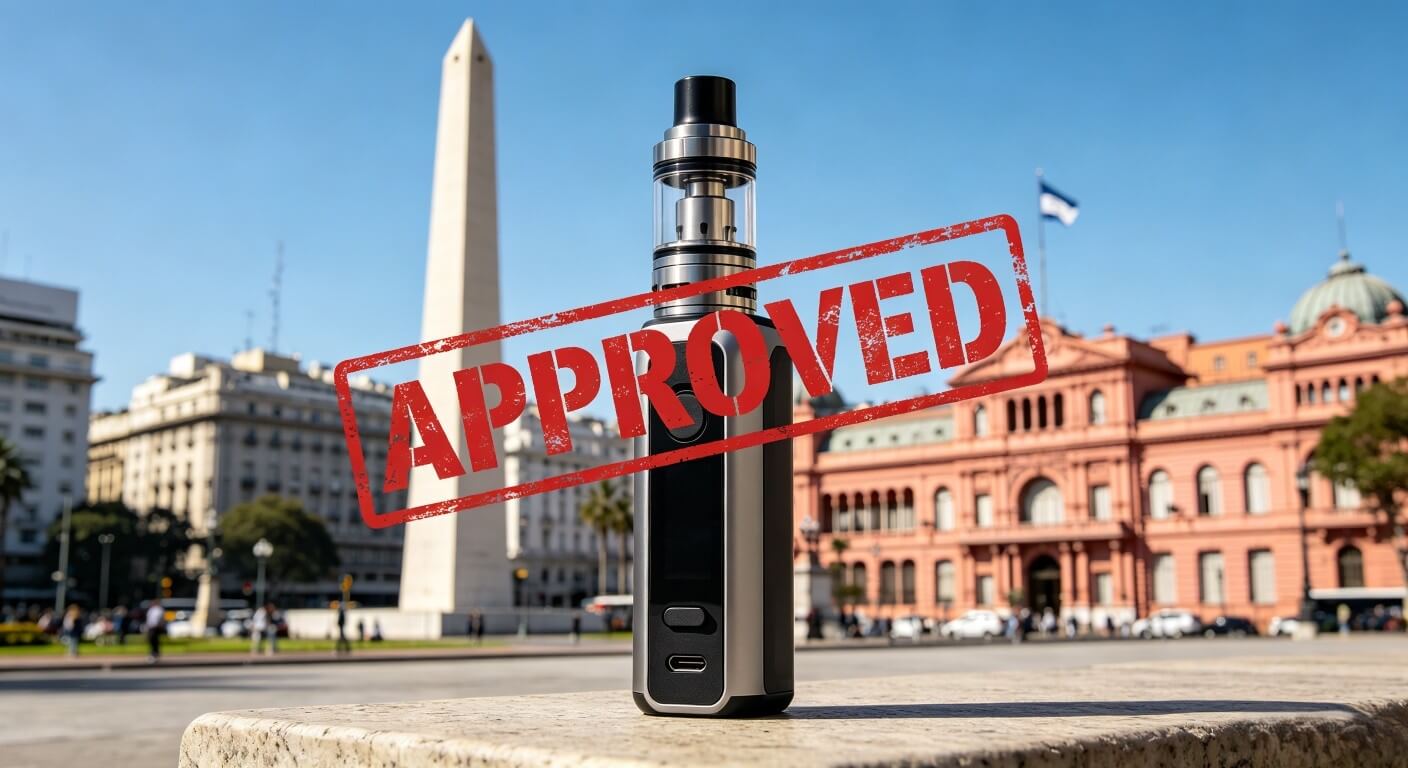
A Landmark Policy Reversal
The reform marks Argentina’s first formal acknowledgment that outright bans have not reduced smoking rates nor prevented the circulation of illicit nicotine products. Under the new framework, the government permits:
Legal sale of vapes, heated tobacco, and nicotine pouches
Age‑restricted access for adults
Product standards and safety controls
Registration and oversight of manufacturers and importers
At the same time, the policy imposes several limitations:
All flavors are prohibited
Disposable vapes remain banned
Nicotine concentrations are tightly restricted
These measures reflect Argentina’s attempt to balance access with caution, creating a regulated environment while maintaining conservative controls on product characteristics.
Early Signs of Progress: Smoking Down, Vaping Up
Although the reform is still in its early years, national health data shows encouraging trends:
Adult smoking prevalence has declined from ~21% (2023) to ~19.5–20% (2025–early 2026)
Adult vaping prevalence has increased from ~1% before legalization to ~2–3% by early 2026
These shifts are modest but meaningful. For a country that saw little movement in smoking rates during the prohibition era, the combination of legal access, regulated products, and increased public awareness appears to be nudging behavior in a healthier direction.
Why the Reform Matters
Argentina’s shift is significant for several reasons:
It introduces risk‑proportionate regulation into a region where many countries still rely on blanket bans.
It acknowledges that combustible tobacco, not nicotine itself, is responsible for the vast majority of smoking‑related disease.
It provides adult smokers with legal alternatives that were previously unavailable.
It demonstrates that public advocacy—including more than 10,000 citizen signatures—can influence national policy.
It aligns Argentina more closely with countries such as Sweden, Japan, and New Zealand, where access to smoke‑free alternatives has contributed to measurable declines in smoking rates.
A Step Forward, With Room to Grow
While the reform represents progress, experts note that Argentina’s restrictions may limit the full potential of harm‑reduction strategies. Flavor bans, for example, remove one of the most effective tools for helping smokers transition away from cigarettes. Similarly, strict nicotine caps may reduce satisfaction for heavy smokers who need stronger alternatives to quit successfully.
Still, the introduction of a regulated market is widely seen as a positive development. It moves consumers away from unregulated products and into a system where standards, safety checks, and age controls can be enforced.
Commentary: A Positive Shift Toward Smarter Tobacco Control
Argentina’s decision to end prohibition and adopt regulated access is a meaningful step toward evidence‑based tobacco policy. The early data—smoking down, vaping up—suggests that even a restrictive legal framework can begin shifting behavior when safer alternatives are made available.
Public‑health analysts emphasize that the transition could accelerate dramatically if Argentina revisits its flavor ban. International evidence consistently shows that flavored smoke‑free products are among the most effective tools for helping adult smokers quit. Allowing flavors would likely:
Increase switching rates
Reduce illicit market activity
Improve outcomes among heavy smokers
Produce faster declines in national smoking prevalence
The reform also sends a message to other nations in the region:
risk‑proportionate regulation can coexist with youth protection, consumer safety, and public‑health goals.
If Argentina continues refining its framework—potentially revisiting flavor rules, nicotine limits, and product categories—it could become a regional leader in modern tobacco‑harm‑reduction policy.