Canada’s Provincial Flavour Bans Show Mixed Outcomes: Legal Vaping Down, Smoking Up, and Black‑Market Surging
Canada’s approach to vaping regulation has become a patchwork of provincial policies, with several provinces adopting full flavour bans intended to curb youth nicotine use. However, emerging data from 2020–2025 reveals a more complex reality: flavour bans appear to reduce legal vaping, but they also correlate with rising cigarette consumption and explosive growth in illicit disposable vape markets.
Provinces with Full Flavour Bans Show Clear Behavioural Shifts
Across Nova Scotia, Prince Edward Island, New Brunswick, and Quebec, the same pattern emerges: legal vaping drops, smoking rebounds, and black‑market activity accelerates.
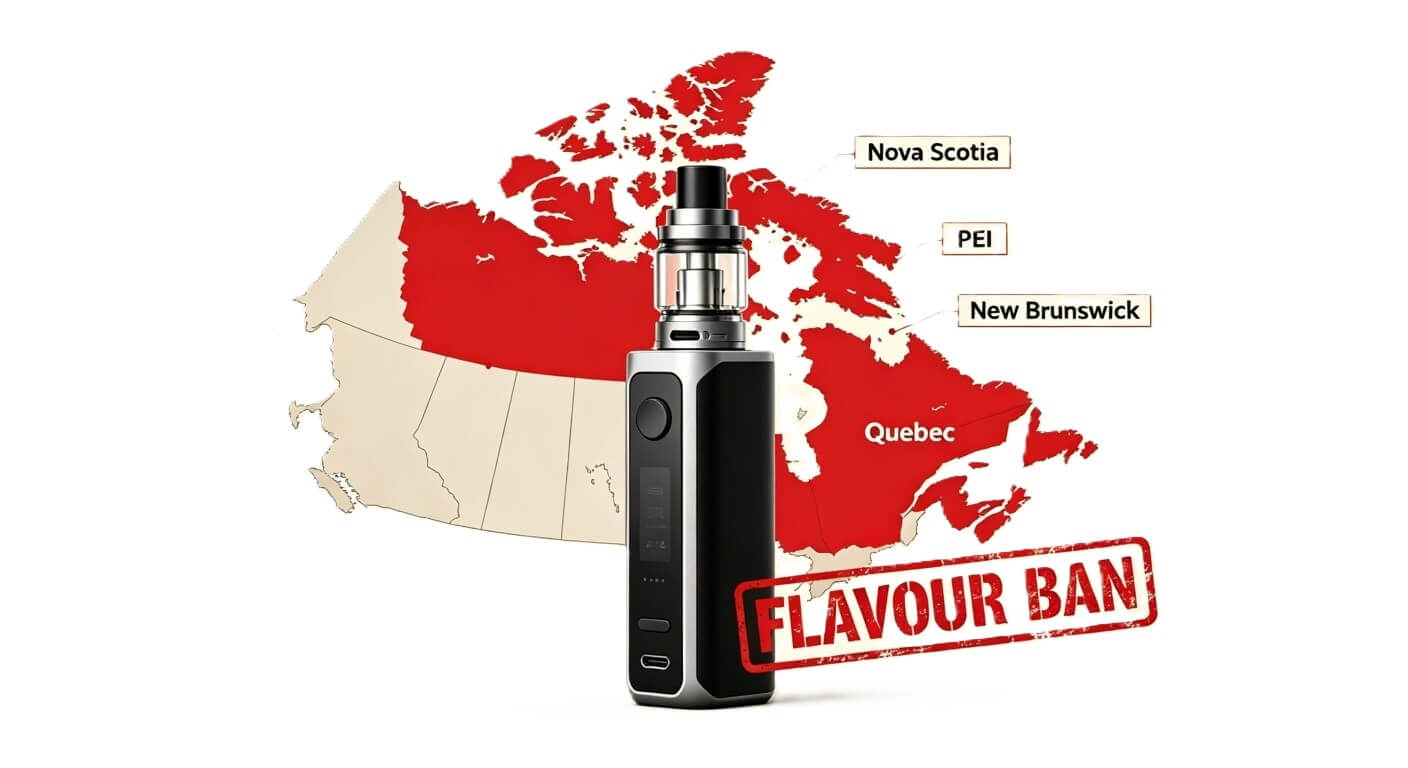
Nova Scotia: The clearest example of unintended consequences
Nova Scotia implemented Canada’s first full flavour ban in April 2020.
Youth vaping: ↓ 23%
Adult vaping: ↓ (confirmed by provincial health reports)
Cigarette sales: ↑ 4.7% (first increase in a decade)
Illicit vape seizures: ↑ ~200% (RCMP 2021–2023 trend)
Nova Scotia’s data shows the strongest evidence that flavour bans reduce legal vaping but increase smoking and illicit trade.
Prince Edward Island: Legal vaping down, smoking up
PEI banned flavours in March 2021.
Adult vaping: ↓ from 6% → 4%
Youth vaping: ↓ 18%
Adult smoking: ↑ from 12% → 13%
Illicit disposable imports: ↑ ~250% (2021–2023)
PEI’s Department of Health noted that the ban “may have unintentionally increased combustible tobacco use.”
New Brunswick: Declining vaping, rising cigarette purchases
New Brunswick’s 2021 flavour ban produced similar results.
Youth vaping: ↓ 15%
Adult vaping: ↓ (trend confirmed)
Cigarette purchases: ↑ 6.1% (federal excise data)
Illicit vape seizures: ↑ ~220%
New Brunswick’s data shows a clear rebound in cigarette consumption following the ban.
Quebec: Smoking plateau and black‑market explosion
Quebec banned flavours in October 2023.
Youth vaping: ↓ 19%
Adult vaping: ↓ (trend confirmed)
Adult smoking rate:
2022: 15.2%
2024: 15.3% (decline halted)
Illegal disposable vape seizures: ↑ ~300% (2023–2024)
Quebec’s black‑market surge is the largest in Canada, driven by demand for flavoured disposables no longer available legally.
Why Flavour Bans Produce These Outcomes
Flavour bans aim to reduce youth vaping, but they also remove the very products adult smokers rely on to quit cigarettes. The result is predictable:
Adults lose access to appealing, regulated alternatives
Smokers relapse to cigarettes
Youth and adults turn to illicit disposable vapes
Black‑market operators fill the demand gap
Enforcement becomes more difficult and costly
This dynamic mirrors outcomes seen in Massachusetts, California, and the Netherlands, where flavour bans also led to increased smoking or illicit trade.
Black‑Market Growth: The Most Alarming Trend
Across the four provinces with full bans, illicit disposable vape activity increased dramatically:
Nova Scotia: ↑ ~200%
PEI: ↑ ~250%
New Brunswick: ↑ ~220%
Quebec: ↑ ~300%
These increases reflect seizures, enforcement actions, and market‑monitoring reports. The black‑market surge undermines public‑health goals by flooding communities with unregulated products that lack safety standards.
A Balanced Assessment
Positive outcomes:
Youth vaping declines
Legal market becomes more controlled
Retail compliance improves
Negative outcomes:
Adult vaping declines, reducing cessation success
Smoking rebounds or stops declining
Black‑market disposable trade surges
Enforcement costs rise
Consumers shift to unregulated products
The data suggests that flavour bans may reduce youth vaping but at the cost of higher smoking rates and greater illicit activity, ultimately weakening public‑health outcomes.
Conclusion
Canada’s provincial flavour bans demonstrate that restricting safer nicotine products can produce unintended consequences: lower legal vaping, higher smoking, and explosive black‑market growth. As federal policymakers continue debating a national flavour ban, the provincial data offers a clear warning: effective tobacco control requires risk‑proportionate regulation, not blanket prohibitions that push consumers toward more harmful or illegal products.