KT&G, Philip Morris and BAT Split Their Bets in Korea's Smoke-Free Race
The three companies that dominate South Korea's alternative-nicotine market are no longer racing in the same lane. KT&G, Philip Morris International and British American Tobacco are spreading their smoke-free investment across different product categories, a divergence that marks a shift from a single heated-tobacco contest to a broader competition across electronic nicotine formats.
Market leader KT&G is doubling down on premium heated products. The company reported a 48.2 percent domestic share of next-generation products, and second-quarter NGP revenue climbed 23.8 percent year on year to 242.7 billion won, according to figures reviewed in recent industry data. Growth was tied in part to a larger mix of premium sticks following the February launch of its lil AIBLE 3.0 device, and KT&G has signalled further NGP launches in the second half of 2026. Industry trackers describe Korea as the most competitive heated market in the world, with KT&G's lil brand holding roughly 47 percent of the heated-stick category in the first quarter of the year.
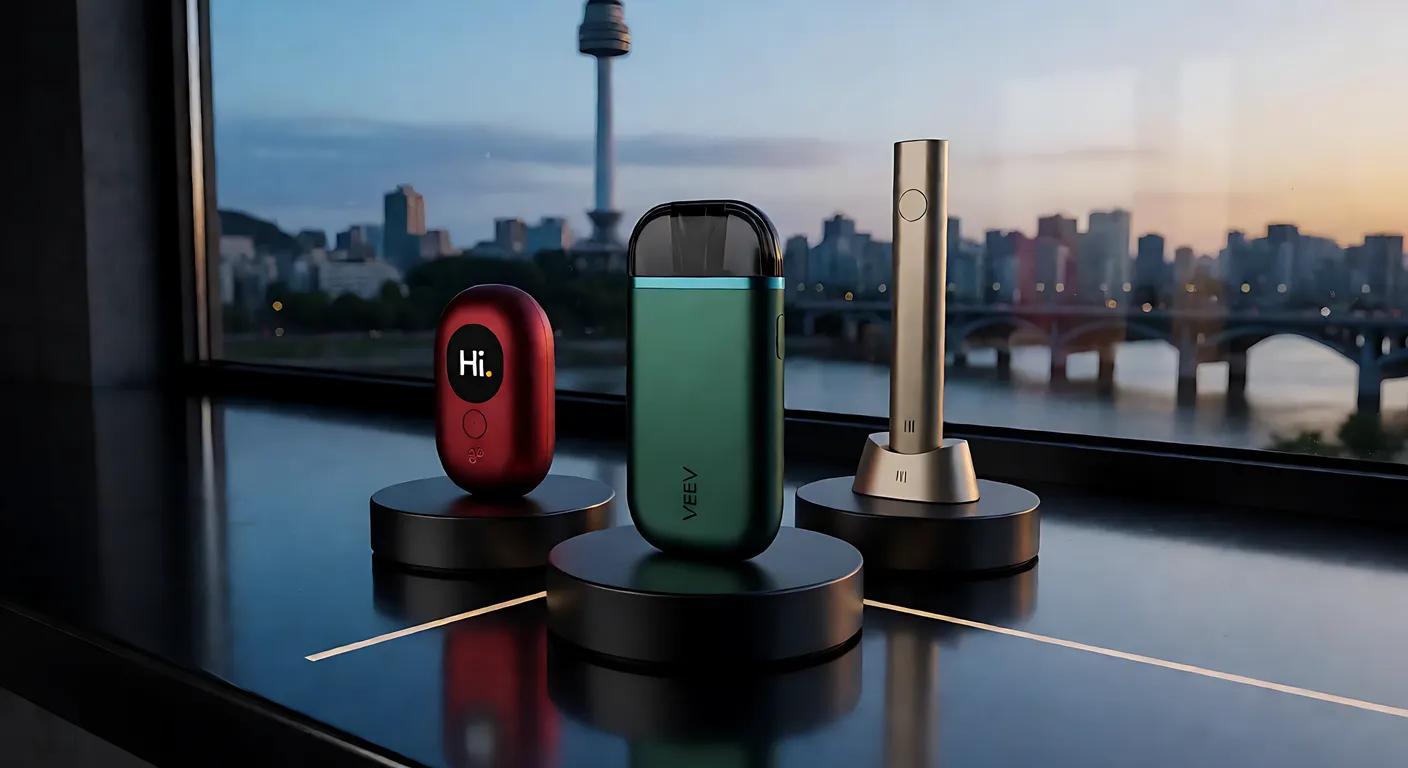
Philip Morris, by contrast, is moving sideways into a new category. Having built its Korean position on IQOS heated tobacco, the company announced in August that it will launch VEEV in the market, adding a liquid-based vaping product to its smoke-free lineup. The expansion puts PMI in direct contact with a growing e-vapor segment that its heated devices have not fully captured, and gives it a second front on which to compete for Korean consumers.
British American Tobacco is reportedly moving in the other direction. Rather than widen its Korean vaping footprint, BAT is scaling back investment in the country's vaping market to concentrate resources on its glo heated business. The retreat reflects glo's established position in Korea's heated sticks, where premium devices dominate and liquid vaping remains a secondary category.
The split is a product of how far Korean consumers have moved away from combustible tobacco. Heated products, which arrived in 2017, have become the market's anchor, and the category now spans device formats and nicotine types. As the national cigarette base continues to contract, the room for new smoke-free formats has opened up, and each of the three firms is treating that room differently.
For retailers and regulators, the divergence carries practical consequences. Brand strategies that worked when a single category dominated no longer apply. Distributors are being asked to stock multiple device families, while policymakers weigh whether to treat heated, liquid and oral nicotine products under one regulatory framework or to keep them separate. The three companies' competing bets suggest the next phase of the Korean market will be decided less by a single winner and more by how each player positions itself across formats.